
AFSCME Local 93’s Political Activity Raises New Transparency Concerns
The broader AFSCME national organization has a documented history of failing to accurately report political expenditures, including violations found by the Washington State Public Disclosure Commission. These violations involved failure to disclose $250,000 in political contributions, late filings, and incomplete reporting of independent expenditures.
AFSCME’s national LM‑2 filings also show substantial political spending relative to representational activity:
- $27.8 million in political activities and lobbying in 2023
- 17% of total expenditures directed to political causes
- Additional $3.1 million in contributions and grants, many to political nonprofits
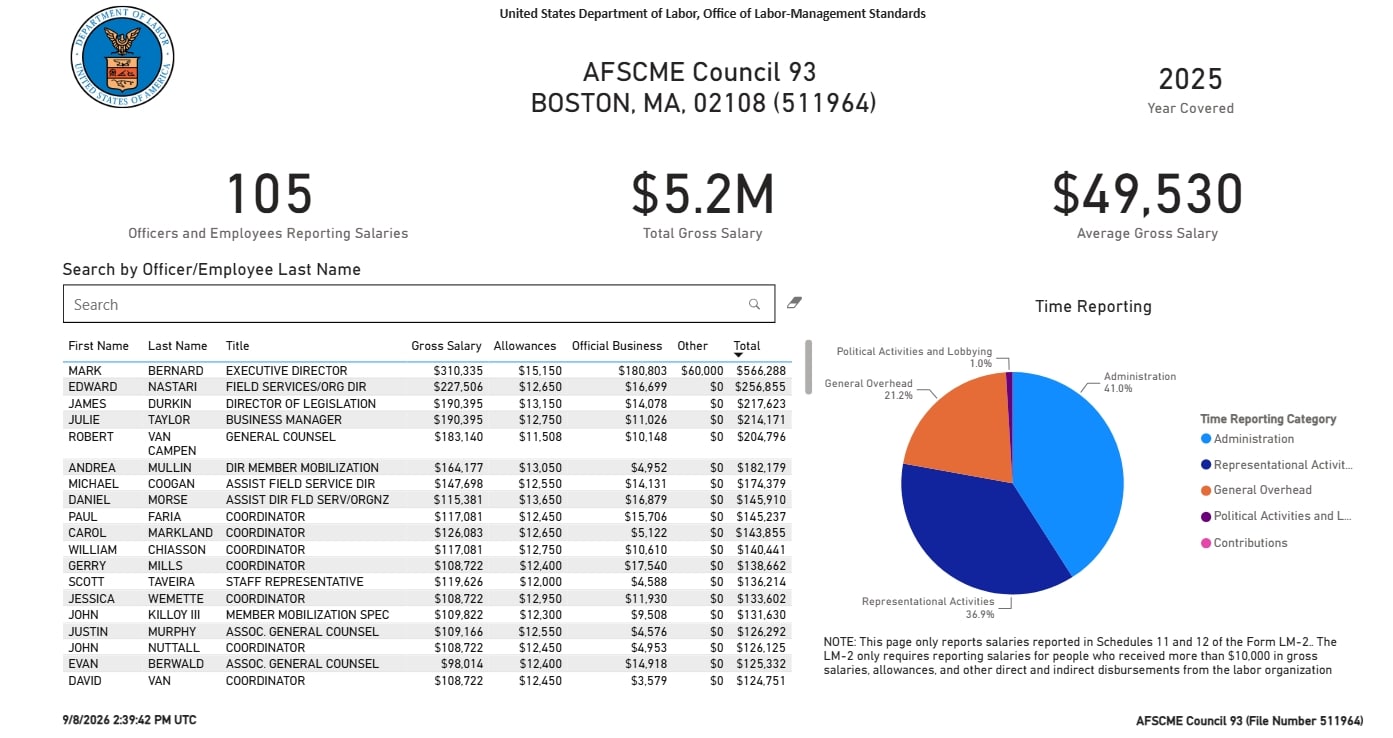
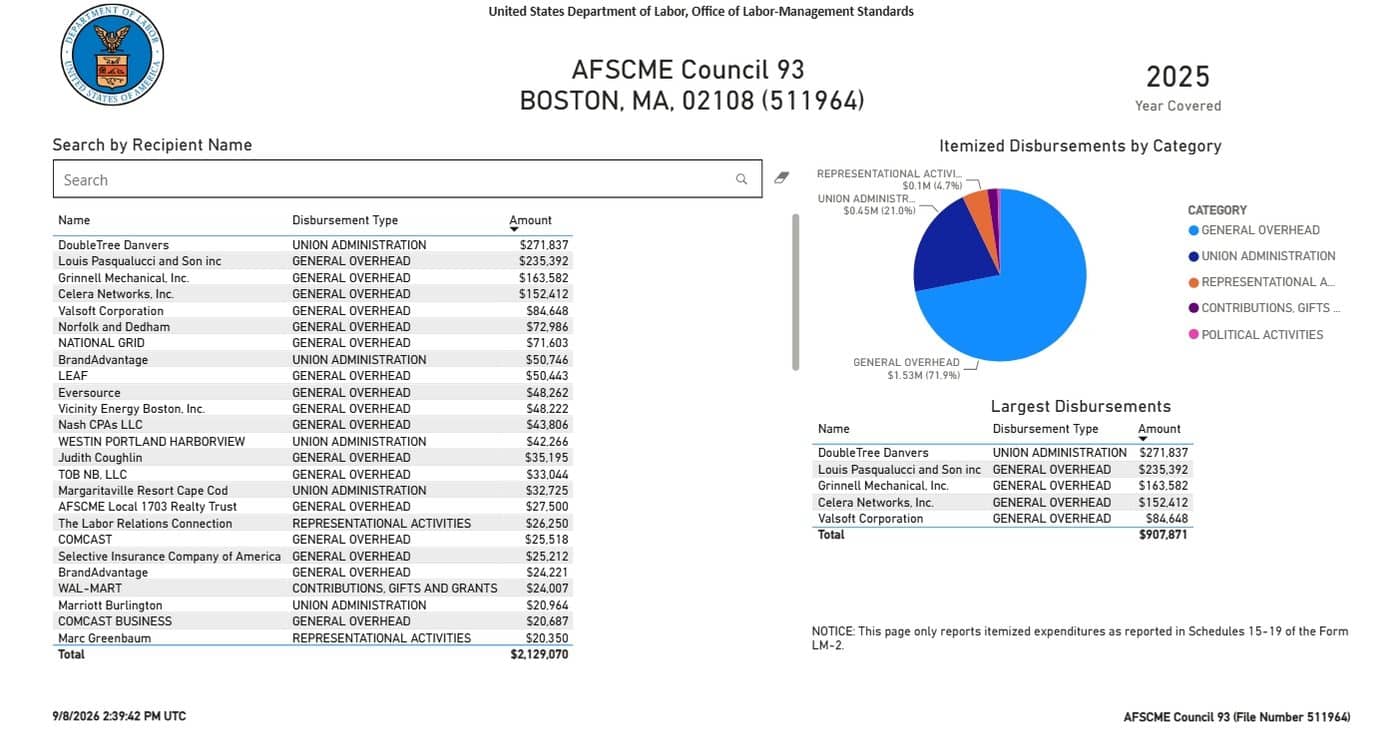
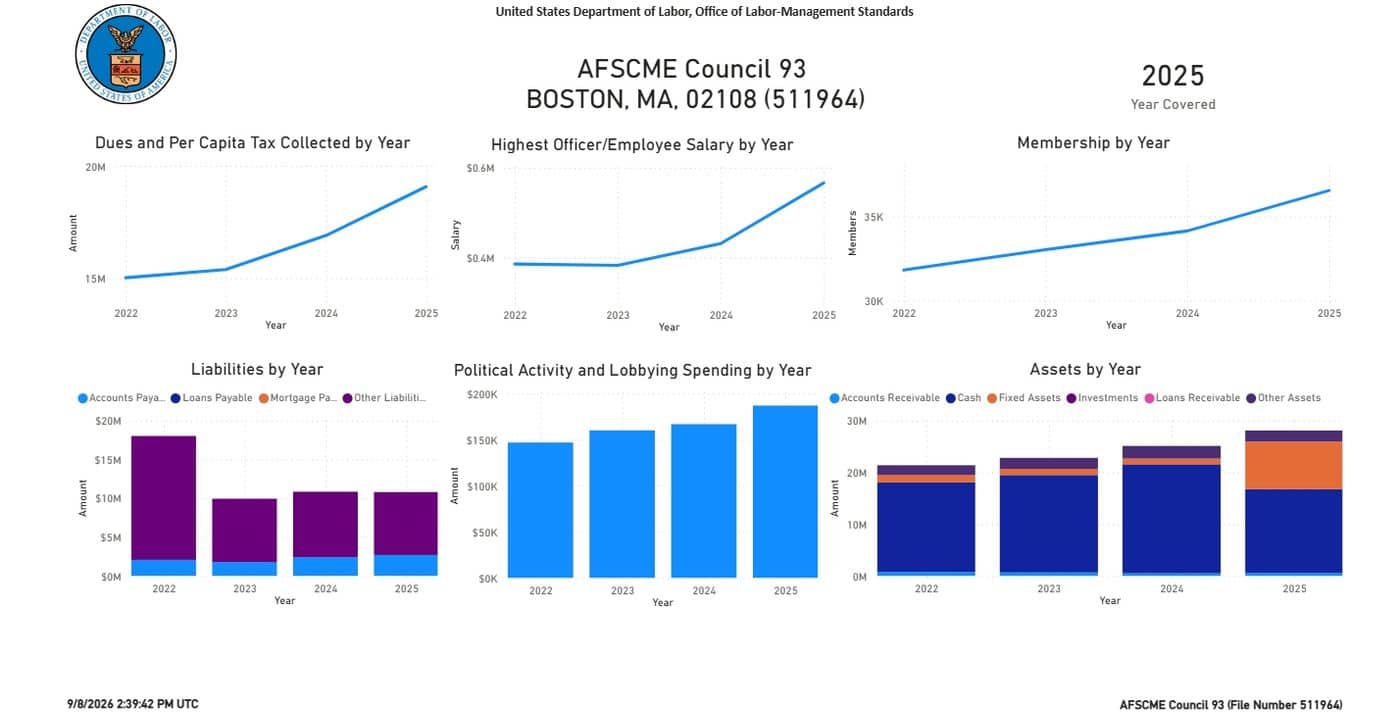
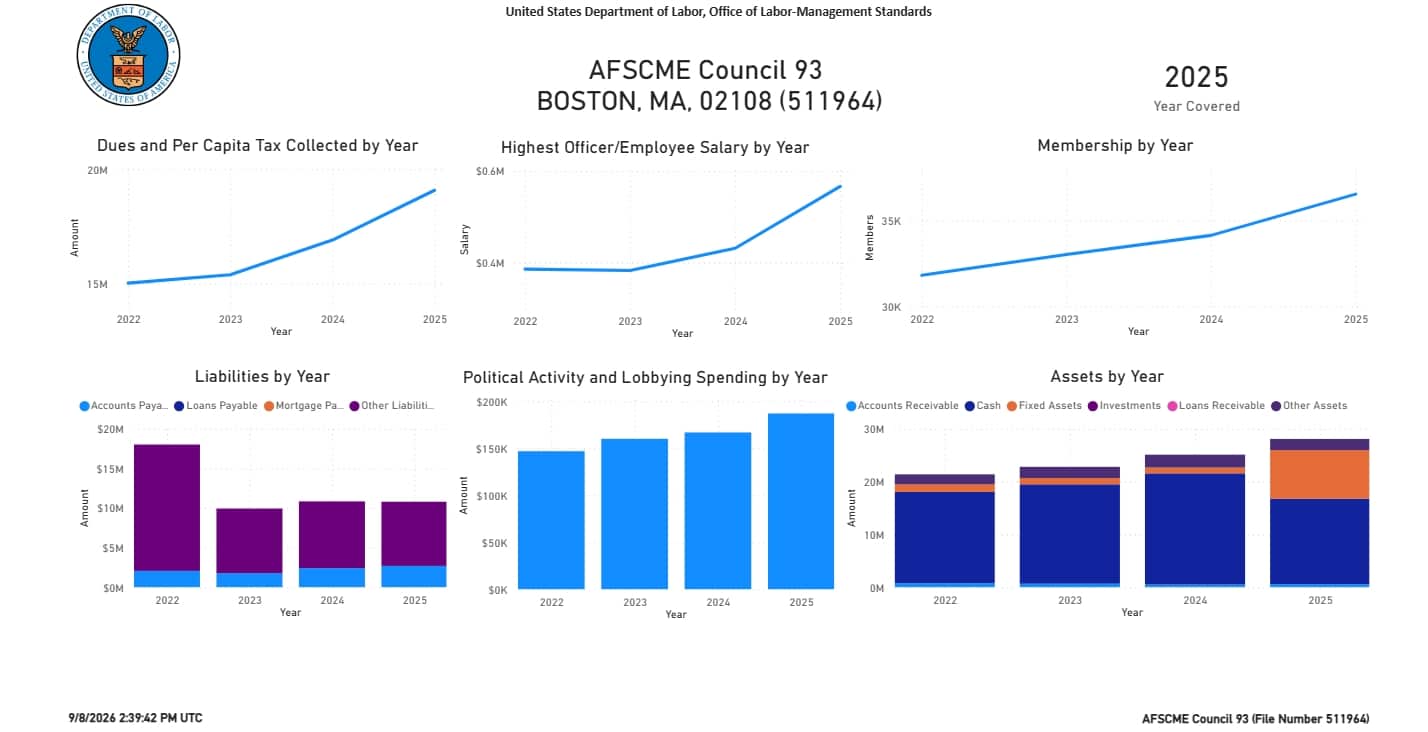
AFSCME Local 93’s most recent LM‑2 report lists an extraordinary $210,000 in “political activities and lobbying” attributed to its legislative director alone, yet reported only $187,005 in political and lobbying costs during the same reporting period. It raises questions about whether the union is accurately reporting the full scope of its political operations.
This concern is not new. AFSCME entities have repeatedly faced scrutiny for under‑reporting political spending, including a major enforcement case in Washington State in which AFSCME failed to disclose $250,000 in political contributions, filed reports late, and omitted required independent‑expenditure disclosures.
If you want to resign from your Public Sector union, you can do so by completing this simple resignation form here (JanusRefund.org). And your resignation and the cessation of dues payments are backed by free legal support from the National Right to Work Legal Defense Foundation.
These numbers suggest AFSCME Local 93’s political activity may be understated, not overstated — especially if political work is being categorized under “representation” or “general overhead.”
What Legislative Directors Typically Do
A legislative director’s core responsibilities typically include:
- Lobbying state lawmakers
- Coordinating political messaging
- Organizing legislative action days
- Mobilizing members for elections
- Working with political coalitions
- Promoting or opposing ballot initiatives
A $210,000 political‑activity figure strongly suggests full‑time political engagement rather than occasional advocacy. If related staff time is allocated to non‑political LM‑2 categories, the union’s reported political spending may significantly understate the true total amount of political expenditures.
Social Media Activity Shows Even More Political Engagement
AFSCME Local 93’s Facebook and X (Twitter) activity provides additional evidence of political operations that may not be reflected in LM‑2 reporting.
AFSCME posts commonly include:
- Endorsements of political candidates
- Calls to action urging members to contact legislators
- Photos from lobbying days at the State House
- GOTV (Get Out the Vote) messaging
- Opposition to or support for ballot initiatives
- Coordinated campaigns with state AFL‑CIO affiliates
If you want to look for what your union may be spending on politics and their political activities on social sites, search for posts involving:
- Endorsements of candidates
- Legislative calls to action
- GOTV (Get Out the Vote) messaging
- Opposition to ballot initiatives
- Coordinated campaigns with state AFL‑CIO
- “Tell your legislator…” posts
- “We’re at the State House today…” posts
- Photos of lobbying days, rallies, or political events
These posts demonstrate political activity that usually should be reflected in LM‑2 political spending categories.
Why This Matters
Employees and taxpayers who subsidize government union employees’ salaries through union contracts, “official time,” and other payment schemes deserve transparency about how their dues and tax dollars are actually spent.
When unions under‑report political activity:
- Members cannot see the full extent of political spending
- Workers may unknowingly fund political causes they do not support
- Public‑sector employees lose visibility into activities affected by Janus rights
- Policymakers and watchdogs cannot accurately assess union influence
LMRDA disclosure principles require accurate reporting for accountability — and for ensuring workers can make informed decisions about their labor union membership, dues, and other fees.
While we suggest that a careful look into AFSCME 93’s spending and reporting is warranted, we are not asserting that an LMRDA violation has definitely occurred.
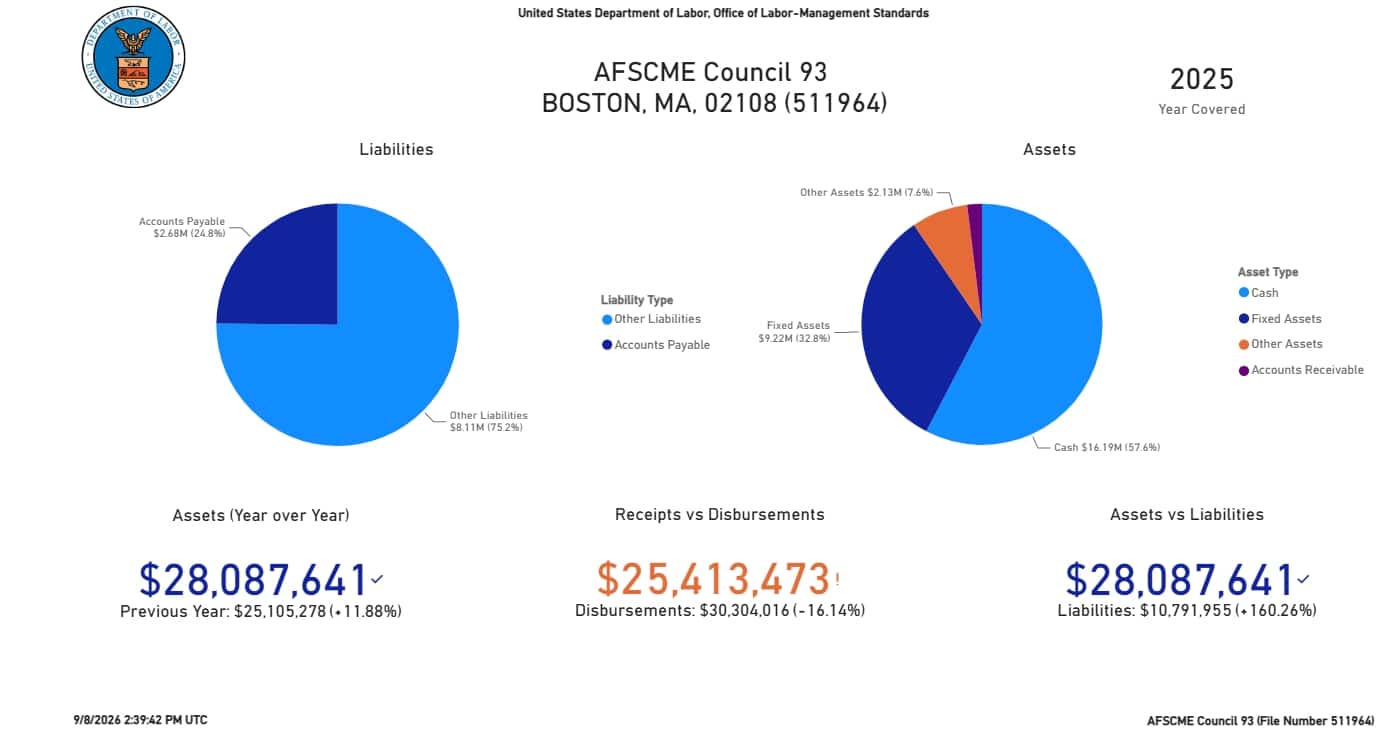
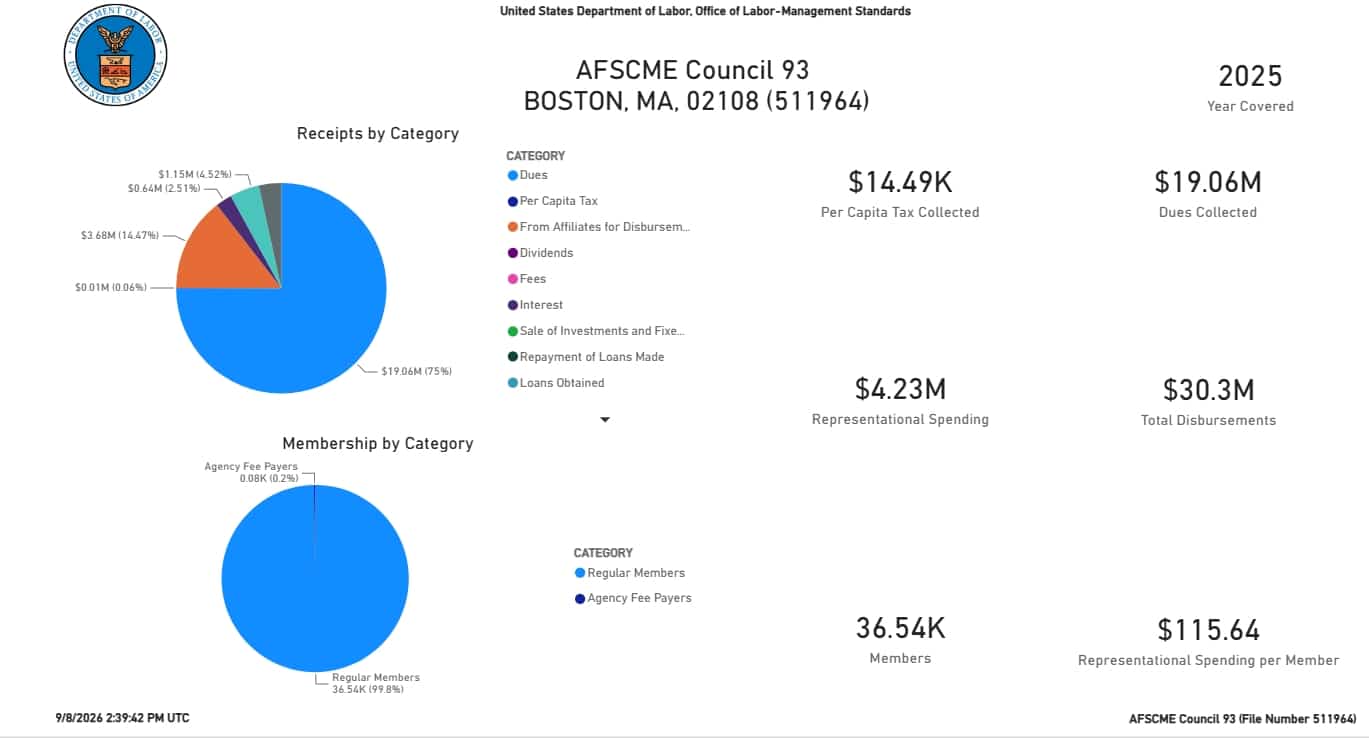
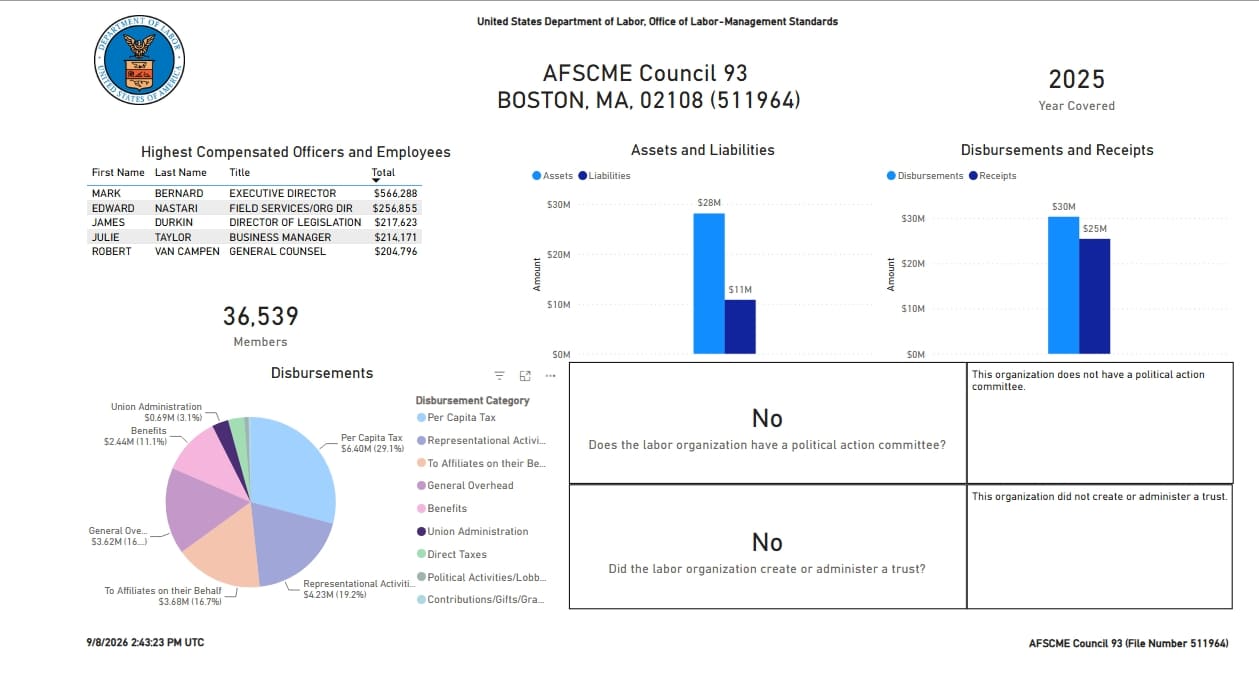
Additional Insights: 2025 AFSCME 93 self-reported data (Source: US DOL.gov OLMS)
OLMS Visualization Link for AFSCME 93