

Fact Sheets
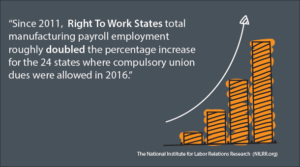
Economic Comparisons: Right To Work States versus Compulsory Unionism States
A Fact Sheet is typically in a quick read format regarding data, research and analysis provided by the staff of the National Insitute for Labor Relations Research (NILRR.org).

How Much Is Pro-Forced Unionism Federal Labor Policy Costing America?
### With Repeal of Forced Dues in 2000, Annual GDP Could Have Been $436 Billion...
Reality Check For Mike Gronstal on Right to Work, Hawkeye State’s Economy
### Iowa's 2001-2006 Income, Job Growth Greater Than Every Neighboring Forced-Dues State's In a recent...
Five Reasons Why Congress Should Enact a National Right to Work Law
1. Freedom to Associate Also Means Freedom Not to Associate - The average man on...
No Truce in IAFF War Against ‘Two-Hatters’
### Will Congress Hand Big Labor More Power to Punish Professional Firemen Who Also Volunteer?...
Right to Work Law is Helping Oklahoma Turn Into an Economic Leader
### Sooner State No Longer Exporting Young Employees and Entrepreneurs to Other States On September...
Since 2001, Right to Work States Lead in Job Growth, Five-to-One
For many years, U.S. Labor Department data have shown that states with Right to Work...
Public-Sector Forced Union Fees Would Hurt Iowa’s Private Sector
### 'Tax Freedom Day' Comes 10 Days Earlier in States That Bar All Forced Union...
Right to Work States Benefit From Faster Growth, Higher Real Purchasing Power – 2006 Update
RTW States Benefit 2006.pdf52.5 KB