
Comparing AI Regulations in Right to Work vs. Non-Right to Work States: A 2025 Snapshot
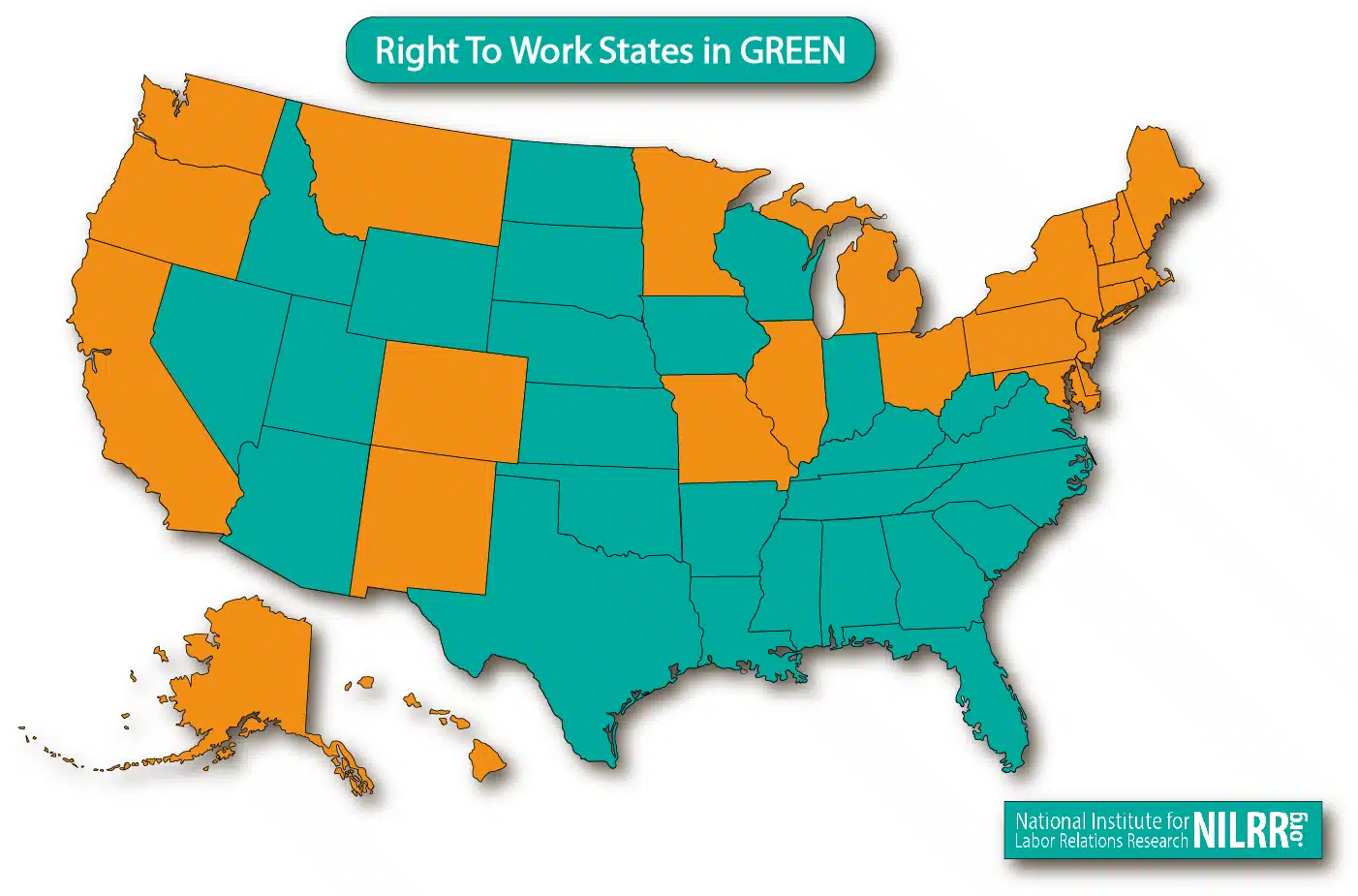
As of October 1, 2025, the U.S. lacks comprehensive federal AI legislation, leaving states to pioneer regulations amid over 1,000 AI-related bills introduced nationwide this year. Of the 260 measures tracked, 22 have been enacted, focusing on areas like deepfakes, employment bias, healthcare, and ethics. Right to Work states—27 in total, emphasizing labor flexibility—tend toward lighter-touch, innovation-friendly approaches that prioritize banning specific harms while minimizing business burdens. Non-Right to Work states (23), with stronger union protections, often enact more stringent, comprehensive rules tied to labor rights, transparency, and anti-discrimination. This divergence reflects broader economic philosophies: Right to Work states foster AI growth to attract tech investment, while non-Right to Work states emphasize worker safeguards amid AI’s disruptive potential.
Below, we compare key dimensions using data from trackers like NCSL, BCLP, Brookings, and IAPP. Patterns emerge from enacted laws (effective mostly 2025-2026), with non-Right to Work states passing more comprehensive bills (e.g., 10+ in California) versus Right to Work’s targeted ones (e.g., 3-5 per active state).
Key Comparison Table: Enacted AI Laws in 2025
| Dimension | Right to Work States (e.g., Texas, Utah, Arizona) | Non-Right to Work States (e.g., California, Illinois, New York) | Key Differences/Patterns |
|---|---|---|---|
| Stringency & Scope | Lighter-touch: Focus on narrow bans (e.g., deepfakes, CSAM) with low passage rates (e.g., Texas introduced many but passed few). Emphasize voluntary disclosures over mandates. | More stringent: Comprehensive frameworks (e.g., anti-bias audits, transparency requirements) with higher passage rates. Often sector-spanning. | Right to Work prioritizes innovation (aligning with business-friendly policies); non-Right to Work integrates with existing labor union laws for broader enforcement. |
| Focus Areas | – Ethics/Deepfakes: Utah SB271 bans non-consensual AI endorsements; SB226 requires disclosures in consumer AI use. – Healthcare: Arizona HB2175 mandates human review of AI denials. – Governance: Texas TRAIGA (HB149) sets voluntary guidelines for responsible AI, effective Jan 2026. Tennessee focused on NCII/CSAM but passed none. | – Data Privacy/Bias: CA AB1008 expands CCPA to AI outputs; IL HB3773 prohibits discriminatory AI in HR (effective 2025). – Healthcare/Generative AI: CA AB3030 requires disclosures for patient AI communications. – General: CA SB2885 standardizes AI definitions; NY pushes broad governance bills. DE Personal Data Privacy Act allows opt-outs from AI profiling. | Non-Right to Work emphasizes employment/health equity (e.g., 13 employment bills passed nationally, mostly non-Right to Work); Right to Work targets misuse without overhauling systems. |
| Labor/Employment Ties | Minimal: Few bills on AI hiring (e.g., notification requirements in some, but not comprehensive). Aligns with RTW’s flexible labor markets. | Strong Labor Union officials’ involvement: IL/CA/NY require notices for AI in hiring/surveillance; ties to FEHA expansions. | Non-Right to Work uses AI regs to bolster union-era regulations and policies; Right to Work avoids rigidity to spur AI job creation. |
| Enforcement & Penalties | Light: Fines for violations (e.g., Utah: $500 first offense); no private rights of action. | Robust Actions: Assessments, audits, private actions (e.g., CA/IL bias claims under existing laws). | Right to Work favors deterrence over litigation; non-Right to Work enables worker lawsuits, raising compliance costs. |
| Economic Impact | Pro-innovation: Attracts AI firms (e.g., Texas/Florida hubs) by reducing barriers; 22% AI job growth in RTW states. | maintaining status quo, worker-focused: May slow adoption; higher costs in non-Right to Work (e.g., CA’s patchwork adds compliance layers). | Right to Work correlates with faster AI integration; non-Right to Work with “cautious” slow growth. |
Broader Trends and Implications
- Legislative Volume: Non-Right to Work states like New York (most bills introduced) and California (10 plus enactments) lead in activity, often Democratic-sponsored (two-thirds of bills). Right to Work states like Texas pass targeted laws but introduce more without high passage, reflecting bipartisan caution.
- Gaps: Few states (Right to Work or not) regulate elections/CSAM deeply (0 states have signed legislation); government AI use sees bipartisan interest but low enactment. Florida/Tennessee (Right to Work): proposed but none passed in 2025, focusing on 2024 holdovers like deepfakes.
- Future Outlook: With federal moratoriums faltering, states may harmonize (e.g., via model acts), but Right to Work and non-Right to Work divides could fragment compliance for multistate AI firms. Right to Work approaches may accelerate economic gains from AI, while non-Right to Work ensures more censorship deployment.